
HISTORY ON THE EDGE: 1968: THE YEAR AMERICA EMBRACED SPRAWL (AND DESTROYED THE PLANET?)
You are kindly invited to a new lecture in the History on the Edge series, which will take place on Wednesday, February 11, 2026, at the INZ premises or via the ZOOM link: https://us06web.zoom.us/j/85093074535?pwd=chFdSCgScVg8fw1djh3bVz8h9gqWtm.1 . In the new season, lectures will take place at 3 p.m. and if you will be joining us in person, you are welcome to a coffee 20 minutes before the lecture begins.
The lecture will be given by Robert Gioielli, and the title of the lecture is “1968: The Year America Embraced Sprawl (And destroyed the planet?)”. The lecture will be held in English.
1968: The Year America Embraced Sprawl (And destroyed the planet?)
Automobile intensive suburban sprawl is the defining characteristic of the American metropolis. Single-family home communities ooze across the landscape, and in most suburbs it is very difficult to get anywhere without a car. This style of city-building is also a major source of the country’s greenhouse gas emissions. How did it get to be this way? Most people argue it is because Americans love their cars, cities have more wide-open space than in Europe or Asia, or there is a preference for the privacy of the individual home. But the stubborn persistence of sprawl is not driven by cultural or geographic determinism. This talk will explore how the continued sprawl of American suburbia has its roots in social and racial conflicts in the late 1960s and early 1970s. In response to the waves of civil rights protests over equal access to segregated communities, the U.S. Congress passed comprehensive legislation to try and finally dismantle housing segregation in 1968. The response to these new laws by white communities, however, reinforced spatial inequalities, exacerbated environmental justice, and further entrenched American sprawl. All of which contributed to the mounting climate crisis.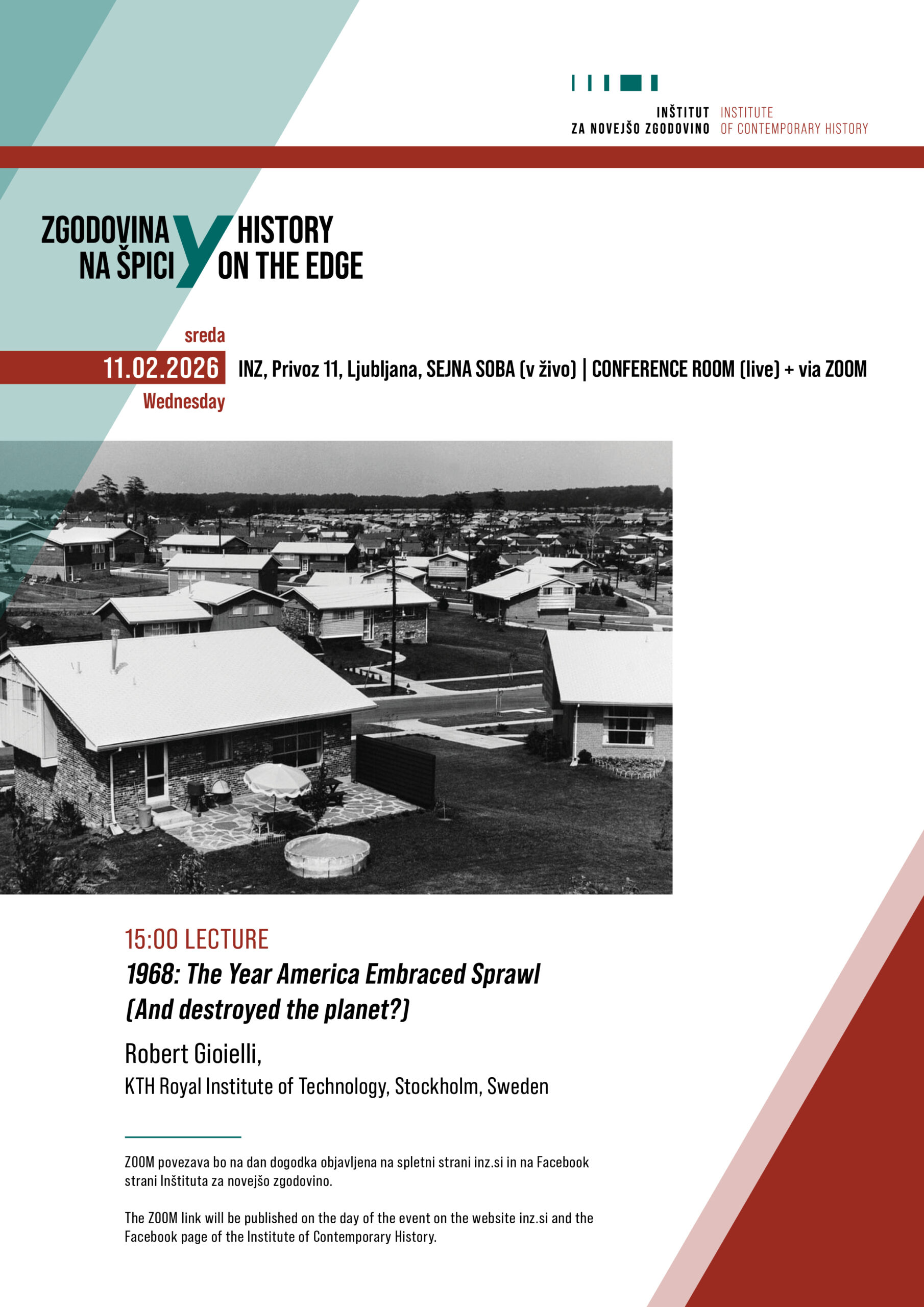 Zgodovina na Špici / History on the Edge