
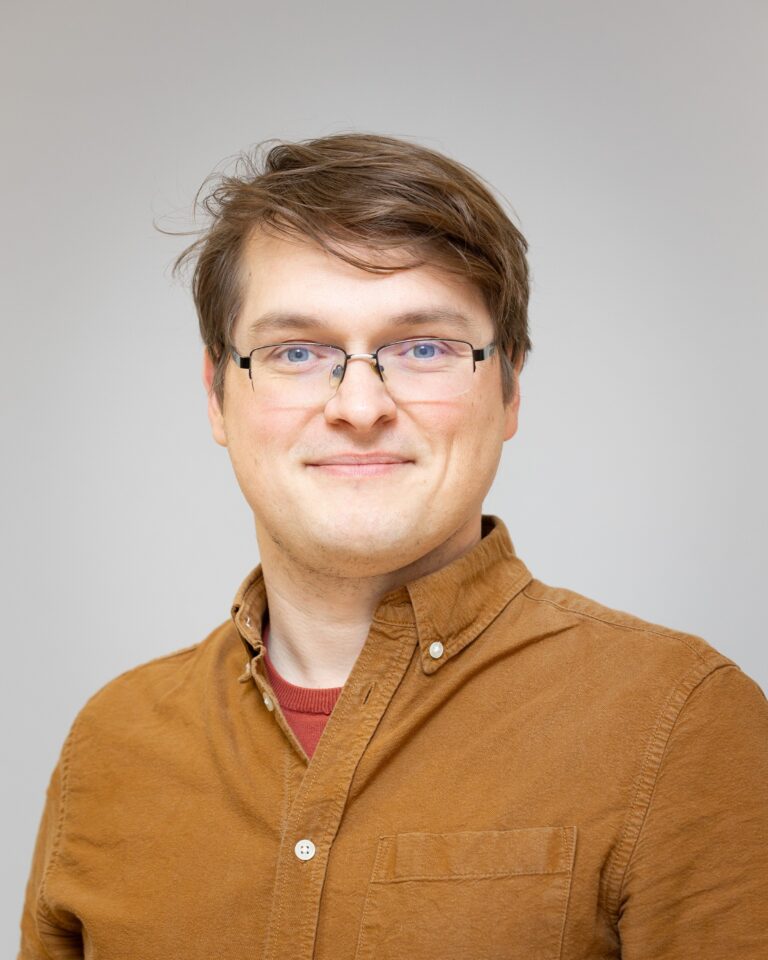
Gábor Csikós, PhD
college senior lecturer
András Pető Faculty of Semmelweis University (Budapest, Hungary)
Visiting Fellowship 2025/26 (August 1, 2026 – August 30, 2026)
Gábor Csikós holds degrees in both psychology and history and earned his PhD in 2019. He currently teaches psychology at the Pető András Faculty of Semmelweis University. His research investigates how psychiatry has responded to social change, especially in the Hungarian context, and how certain mental disorders – such as neurosis – came to be understood as socially induced. This line of inquiry highlights the evolving relationship between psychiatrist and patient, the rise of self-help discourses, and the therapeutic shaping of subjectivity. His interdisciplinary training allows him to bridge medical humanities, intellectual history, and social history, situating psychiatry within broader transformations of modern society. He is actively engaged in international collaborations and has presented his work at conferences across Europe, with publications appearing in both Hungarian and international journals.
Statement of interest
I see neurosis as a key analytical concept that opens a rich window onto broader social and political tensions. Historical discourses of mental illness often reveal 1) perceived dysfunctions in social life, 2) proposed explanations that range from individual pathology to structural problems, and 3) implicit or explicit recommendations for reform, whether targeting the self or society. I believe this framework holds untapped potential for historians of society and psychiatry alike. To make this research fruitful, an international comparison is essential. Slovenia – and the former Yugoslav context more broadly – offers a compelling case. What intrigues me is the contrast between post-war Hungarian psychiatry – where psychoanalysis, despite its rich traditions, survived only as a hidden undercurrent with limited critical potential – and the vibrant Freudo-Marxist and social psychiatric schools that emerged in socialist Yugoslavia, particularly in Slovenia during the 1960s.
Selected publications
- Ö. Kovács, József, Gábor Csikós, Gergely Krisztián Horváth (eds) The Sovietization of Rural Hungary, 1945–1980: Subjugation in the Name of Equality. London: Routledge, 2023.
- Chapter
- Csikós, Gábor. “Treating Mutism in Hungarian Child Psychiatry, 1957–60.” In Doing Psychiatry in Postwar Europe: Practices, Routines and Experiences, eds: Gundula Gahlen, Henriette Voelker, Volker Hess és Marianna Scarfone, 186–210. Manchester: Manchester University Press, 2024.
- Csikós, Gábor. “Judgement of God, Inadequate Adaptation, or Simply Menopause? Collectivization Traumas behind Psychiatric Diagnoses in Hungary (1959–1961).” In Narrativity and Violence: Conceptual, Ethical and Methodological Challenges, eds: Sabine Andresen, Christof Mandry és Doris Reisinger, 113–138. Bielefeld: Transcript Verlag, 2024.
- Article in Peer-viewed Journals
- Csikós, Gábor: Self-Help in Socialist Contexts: Nervousness and Responsibilisation in 1960s Hungary. History of the Human Sciences 2025.
- Csikós, Gábor. “Countryside Modernized or Traumatized? Rural Mental Health in Hungary after the Collectivization of Agriculture.” Hiperboreea 7, no. 1 (2020): 74–98.
- E-mail:
- csikos.gabor@semmelweis.hu