
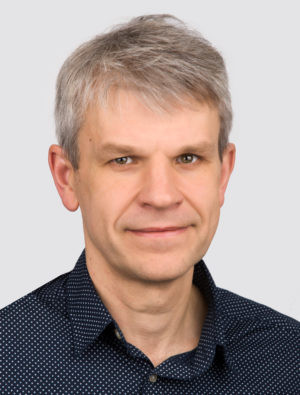
Remigijus Civinskas, Visiting Fellowship 2024/25
Biography
Since 2001, Remigijus Civinskas has been serving as a lecturer and associate professor of history and public policy in the Department of Public Administration at Vytautas Magnus University. As of 2023, he also holds the position of researcher at the Vytautas Kavolis Interdisciplinary Research Institute in Kaunas, Lithuania. With over fifteen years of experience in public policy and modern history research, he has authored several monographs and numerous scientific articles.
In his doctoral dissertation and later research projects, he looked into Russian bureaucracy and local government systems in great detail. This gave him a lot of knowledge about how systems change and how structural and cultural factors interact. His primary research interests encompass modern and historical bureaucracy, as well as public sector reforms.
The focus on Slovenian bureaucratic reform research was prompted by a desire to investigate and compare the effects of external factors, such as political doctrine, support from international actors, and Europeanization, as well as internal factors, including politicisation, the influence of post-Soviet nomenclature, and cultural traditions. Slovenia is a very interesting case because its path to reform is very different from that of the Baltic states and CEE countries. This shows how these factors affect the change in bureaucracy in a very useful way.
Visiting fellowship January 2025
Motivation
During his fellowship, I will work on my project “Institutional Transitions: Bureaucracy Reforms in Lithuania and Slovenia (1991–2004)”, in which I aim to investigate the comparative trajectories of public administration reforms during the post-Soviet and post-Yugoslav periods. The proposed project seeks to analyze bureaucratic reforms in Lithuania and Slovenia, examining how historical legacies, institutional structures, and contextual factors shaped their trajectories. While Lithuania implemented centralized and hierarchical civil service systems, Slovenia embraced elements of the New Public Management and some traditional, Weberian. Both countries faced unique challenges in stabilizing their political-administrative processes while preparing for EU and NATO accession.
Drawing on theories of historical institutionalism and bureaucratic transformation, I will employ a qualitative research methodology encompassing archival research, documentary analysis, and expert interviews. Access to Slovenian libraries, and academic networks (planned 6 interviews) during the fellowship will be pivotal in achieving a nuanced understanding of these reforms.
This research aligns closely with the institute’s focus on contemporary history and the intersections of political, economic, and social transformations. By engaging with Slovenian scholars and accessing critical resources, I aim to contribute to the comparative historiography of post-communist transitions, enriching the institute’s ongoing discourse. Additionally, my expertise in public policy and governance studies will foster interdisciplinary collaboration with INZ researchers.
List of publications
Civinskas, R., & Glemža, L. (2018). Kauno miestiečių elito kaita 1764–1831 metais: monografija. This monograph highlights systemic transformations in governance during critical historical junctures.
Pivoras, S., Civinskas, R., & Visockytė, E. (2014). Valstybės tarnybos sistemos tobulinimas Lietuvoje: pasirinkimai, požiūriai, sandėriai. Kaunas: Vytauto Didžiojo universitetas: mokslo studija. (This monograph highlights systemic transformations and development of civil service system in 2002-2013)
Civinskas, R., Gončiarova, N., & Pivoras, S. (2020). The Application of Customer Service Standards and Street-Level Bureaucrats’ Discretion in Lithuanian State Agencies. A detailed analysis of bureaucratic discretion and reform implementation.
Civinskas, R. (2018). Amid the Changing Landscape of City, Class and Imperial Russian Policy: The Habitus of the Kaunas Urban Elite and Their Symbolic Representation in the Early 19th Century. Lithuanian Historical Studies, 22(1), 51–85.
Civinskas, R. (2006). The Influence of Russian Policy on the Economic Activities of Jewish Townspeople in the First Half of the 19th Century. In V. Sirutavičius & D. Staliūnas (Eds.), Jews in the Economic and Social Structure of Lithuania: Between Intermediary and Competitor (pp. 51–79). Vilnius: LII leidykla. (in lithuanian)
Civinskas, R. (2005). Disputes Between Jews and Townspeople in Lithuania and Russia’s Policies Concerning Jews. In J. Šiaučiūnaitė-Verbickienė & L. Lempertienė (Eds.), Central and East European Jews at the Crossroads of Tradition and Modernity (pp. 332–360). Vilnius.
Civinskas, R. (2008). The Guilds of Kaunas Craftsmen in the Late 18th – Early 19th Century. Kaunas Historical Annals, (9), 67–81. (in lithuanian)
Civinskas, R. (1997). Kaunas Bureaucracy in the Mid-19th Century. Dienos ir Darbai, 4(13), 29–57. (in lithuanian)
Civinskas, R. (2000). The Narrowing and Transformations of the Townspeople Estate in Lithuania at the End of the 18th – Beginning of the 19th Century. Lietuvos istorijos metraštis Historical Annals, 119–147. (in lithuanian)
Civinskas, R. (2001). Integration of Kaunas Jews into the Townspeople Estate: Stereotypes of Russian Jewish Policy and the Townspeople Mentality in 1795–1844. Dienos ir Darbai, 28, 51–66. (in lithuanian)
Civinskas, R., & Kaselis, M. (2009). Institutional Context of Implementation of Quality Initiatives in the Public Sector of Finland and Lithuania. Baltic Journal of Law and Politics, 2(2), 74–102.
- E-naslov:
- civinskas.remigijus@gmail.com