
Vpogledi 28 : Suše v zgodovini in njihov vpliv na okolje, družbo in prebivalstvo
This monograph examines the issue of drought in Slovenian history from various perspectives. The individual chapters were written by twelve authors. Drought is a natural phenomenon for which there are various definitions, but what they all have in common is that they define drought as a phenomenon caused by a lack of precipitation, which affects the hydrological balance. The development of drought is gradual, hence the fact that we know of several types of drought, which differ in their causes and consequences.
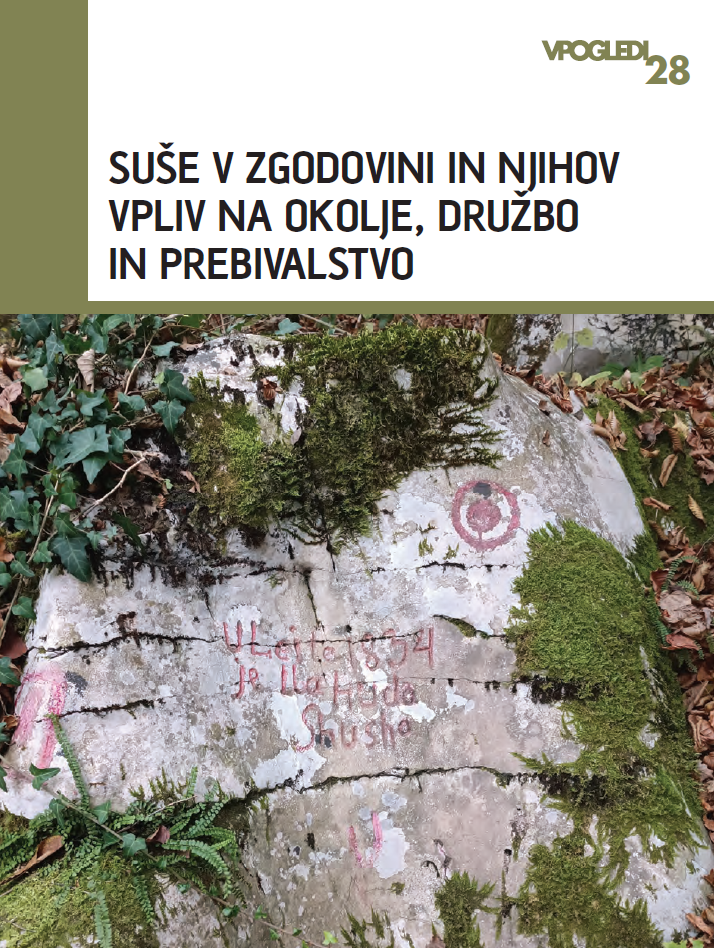
The core chapters deal with drought in a historical context, particularly in terms of agricultural drought, which in certain periods also caused a shortage of feed and food in Slovenia. The chapters show the social and economic consequences of drought in the period from the end of the 19th century to the 20th century in Slovenia or individual parts of Slovenia, and the responses to this natural phenomenon. The chapters dealing with the topic during the socialist period show Slovenia’s confrontation with drought in the Yugoslav context./p>
The chapters are based on archival material and literature and provide a comprehensive overview of a topic that at first glance seems to be outside the context of historiography.
The framework for the historiographical chapters is provided by the chapters of the monograph, which, to caricature, are written by experts. They conclude that drought is not merely a physical phenomenon, but that its impact on society is reflected in the interrelationship between drought as a natural phenomenon and people’s demands for water supply. They conclude that reconstructions and interpretations of climatic conditions in Slovenia are an important source for understanding the region’s climate history. Historical data and historical memory are important and necessary for understanding the region’s climatic patterns, including droughts, in drought analyses. It is precisely this interdependence of different disciplines that creates a whole, which is confirmed by the present chapters, some of which go a step further, as they are also interested in the self-effectiveness of the response to drought.