
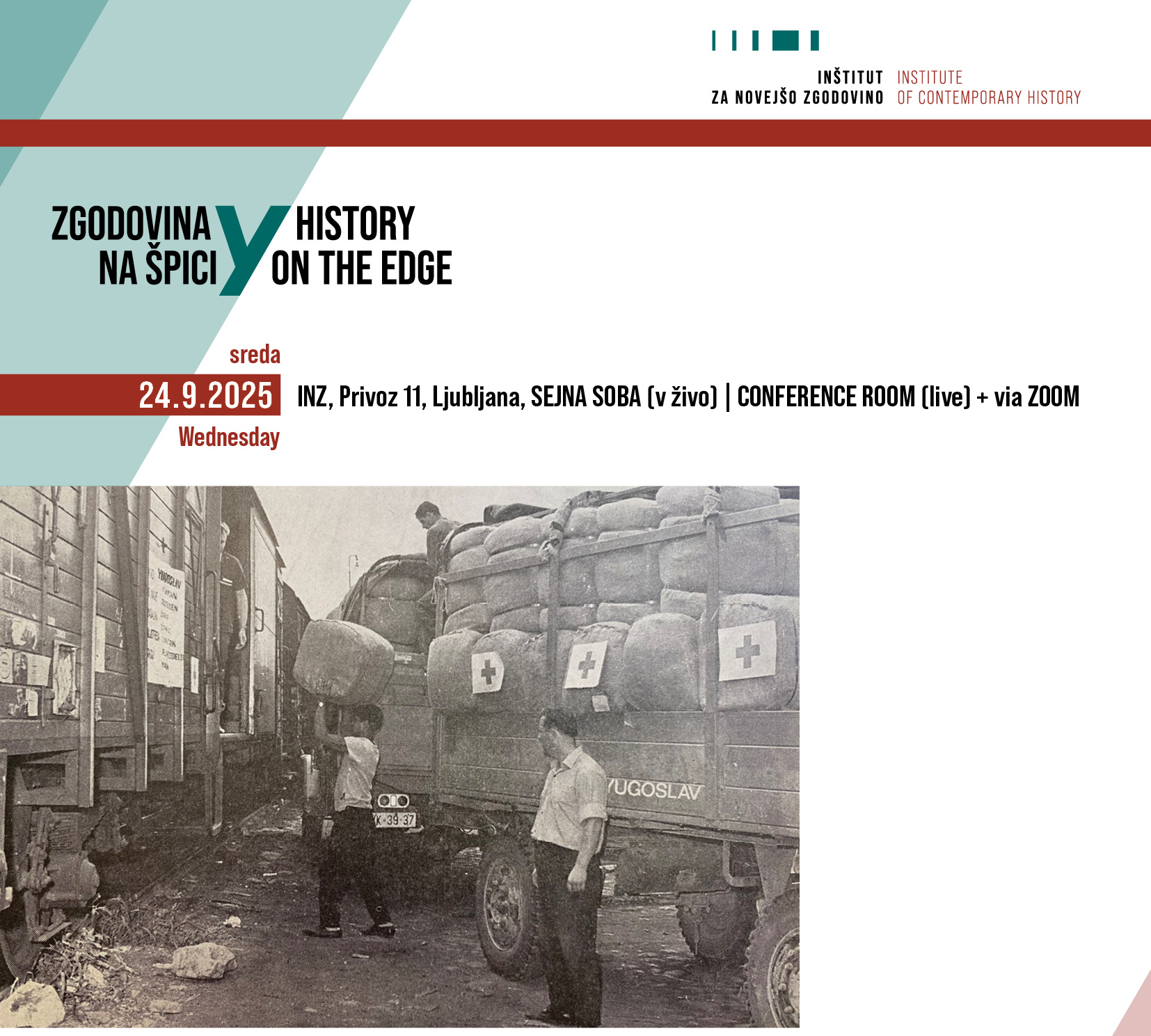
Francesca Rolandi: Humanitarizem po jugoslovansko. Hladnovojne razmejitve in alternativni modeli mednarodne pomoči
Zgodovina na Špici / History on the Edge
You are kindly invited to the first autumn lecture after the summer break in the History on the Edge series, which will take place on Wednesday, September 24, 2025, at the INZ premises or via the ZOOM link: https://us06web.zoom.us/j/85093074535?pwd=chFdSCgScVg8fw1djh3bVz8h9gqWtm.1. In the new season, lectures will take place at 3 p.m.
The lecture will be given by Francesca Rolandi, and the title of the lecture is “Humanitarianism, the Yugoslav way. Cold War divisions and alternative patterns to international aid”. The lecture will be held in English.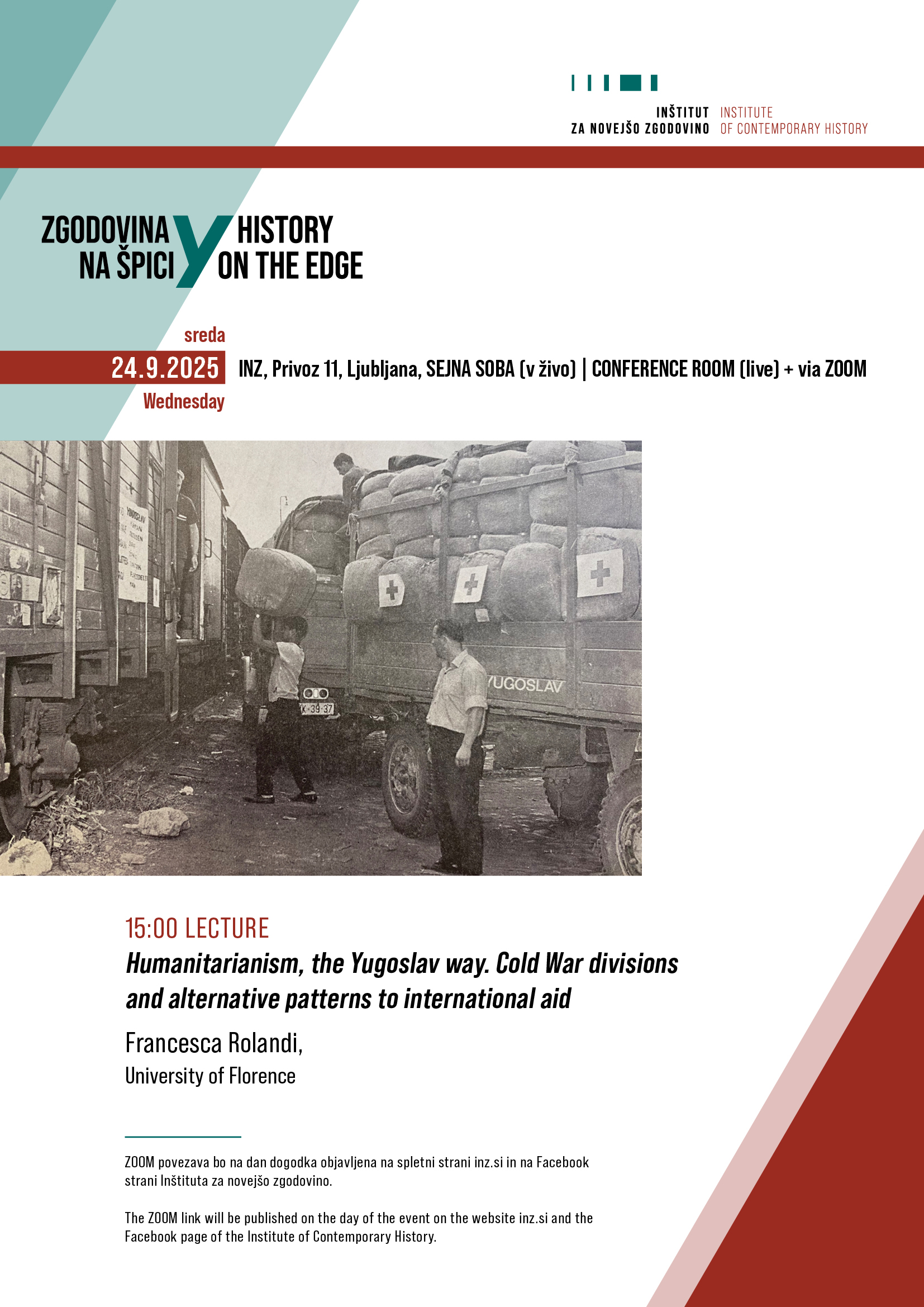
Humanitarianism, the Yugoslav way. Cold War divisions and alternative patterns to international aid
Throughout the Cold War, Yugoslavia stood up as a site of encounter between the Eastern and Western blocs, a feature informing almost any aspect of life in the country. Humanitarian and solidarity initiatives were no exception. The presentation will reflect on the peculiar “hybrid” nature of a selected list of initiatives undertaken in Yugoslavia in support of the distant suffering. In particular, it will focus on the period following the Nigerian civil war and the subsequent Biafran famine (1968). These events in the African continent are widely regarded as a turning point in international humanitarianism, which attracted unprecedent attention in Western countries. The humanitarian emergency also saw a fresh engagement of non-state actors and a novel role for faith-based organizations. Last but not least, the media emerged as a key player in framing the public discourse through the use of images frequently depicting the mere bodies of helpless child victims of starvation.
Yugoslavia, a socialist country, was far from being isolated from the Western bloc. Yet, it cultivated a supposedly horizontal understanding of solidarity that clashed with the hierarchical philanthropic vision of aid to the Third World often promoted by Western actors. This presentation will explore to what extent different international trends reached out or were accommodated within Yugoslavia, looking at a wide range of players, encompassing state and non-state actors, top-down and bottom-up mobilizations.
Recent scholarship has witnessed a renewed interest in solidarity networks in socialist countries; the latter have often been regarded as an alternative set of values, separated from Western patterns. This presentation will reflect on how different understandings of compassion with the Global South coexisted and were even entangled in socialist Yugoslavia.
Zgodovina na Špici, predavanje 24. 9. 2025