HISTORY ON THE EDGE: THE NON-ALIGNED MOVEMENT AND THE NEW INTERNATIONAL ECONOMIC ORDER: LIVES, ALTER-LIVES, AND AFTERLIVES
You are kindly invited to a new lecture in the History on the Edge series, which will take place on Wednesday, May 13, 2026, at the INZ premises or via the ZOOM link: https://us06web.zoom.us/j/85093074535?pwd=chFdSCgScVg8fw1djh3bVz8h9gqWtm.1 . In the new season, lectures will take place at 3 p.m. and if you will be joining us in person, you are welcome to a coffee 20 minutes before the lecture begins.
The lecture will be given by Paul Stubbs, and the title of the lecture is “The Non-Aligned Movement and the New International Economic Order: lives, alter-lives, and afterlives”. The lecture will be held in English.
The Non-Aligned Movement and the New International Economic Order: lives, alter-lives, and afterlives
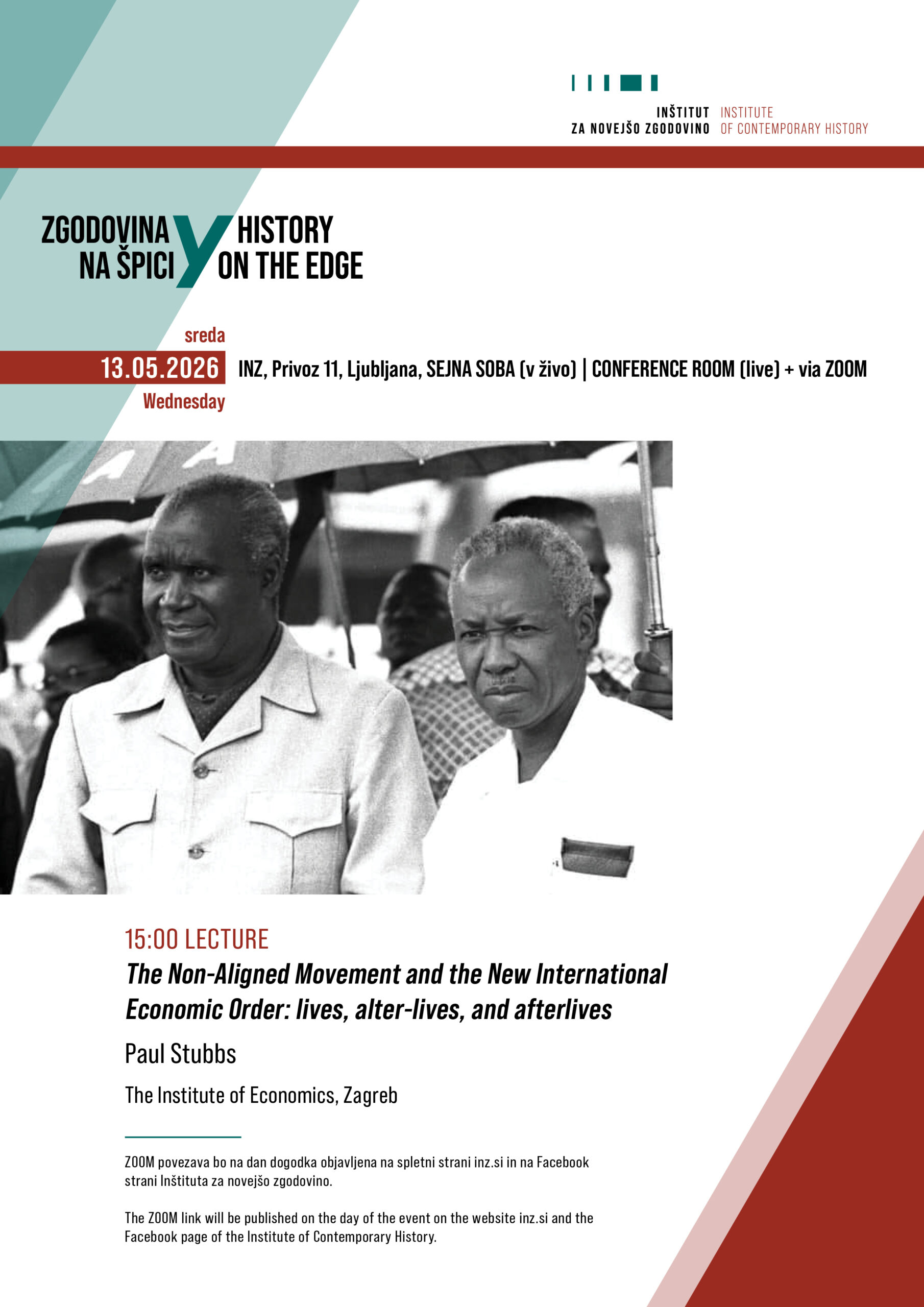
Initially focused on issues of political sovereignty and global (in)security, the Non-Aligned Movement (NAM) turned to economic issues more centrally in the 1970s by advocating a complete transformation of the international economic system based on neo-colonialism and systematic exploitation of the periphery by the core. Adopted by acclamation on 1 May 1974 at a special UN General Assembly, the New International Order (NIEO) had been formulated by the NAM, along with the G-77 group and the United Nations Conference on Trade and Development (UNCTAD). The lecture traces the origin and fate of the NIEO, focusing on the role of the Non-Aligned Movement and its leading members and on the difficulties in maintaining the unity of the Global South, especially after the second oil crisis of 1979. It addresses some of its intellectual origins, as well as aspects such as gender, migration, and the environment, that were not central to the NIEO but were subject to global debates at the time. Although contradictory in many of its features, and ultimately defeated, the NIEO was an attempt, underpinned by the agency of the Global South, to articulate global economic and social rights consequent upon political rights gained through processes of decolonisation. Exploring the NIEO as an attempt at “worldmaking otherwise” helps us to see the neo-liberal order that followed as neither inevitable nor unchangeable, offering valuable lessons for today’s struggles.