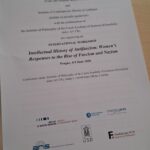
INTERNATIONAL WORKSHOP INTELLECTUAL HISTORY OF ANTIFASCISM: WOMEN’S RESPONSES TO THE RISE OF FASCISM AND NAZISM
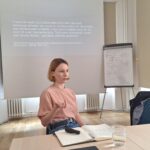
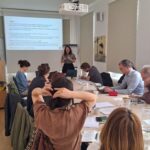
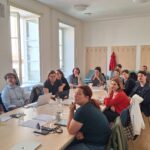
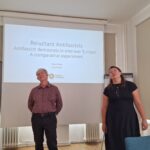
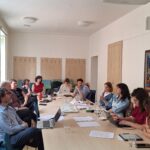
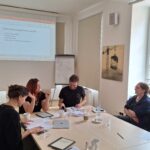
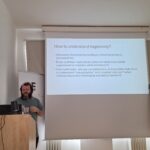
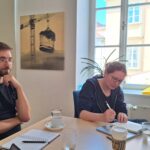
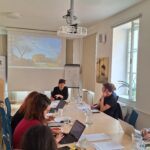
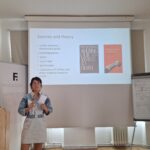
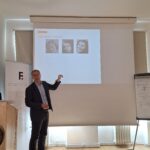
We are pleased to share that the international workshop Intellectual History of Antifascism: Women’s Responses to the Rise of Fascism and Nazism took place in Prague on 4–5 June 2026.
The workshop was the first event organized within the research project Toward an Integrative Approach to Women’s Political Thought in East Central Europe: Cases from Slovenia and Beyond in the Long Twentieth Century (J6-70219), funded by the Slovenian Research and Innovation Agency. The event was co-organized and co-funded with the project Anatomy of European Society: Central Europe as a Phenomenon of Modern History (Strategie AV21), funded by the Czech Academy of Sciences, and was held in collaboration with the Institute of Philosophy of the Czech Academy of Sciences (Filosofický ústav AV ČR), which hosted the workshop. The organizing committee consisted of Kristina Andělová, Isidora Grubački, Ondřej Holub, and Jan Mervart.
The workshop sought to open new perspectives on the intellectual history of antifascism by bringing together scholars working on women’s political thought, feminist responses to fascism, and broader traditions of democratic and antifascist thinking in East Central Europe and beyond. Particular attention was devoted to methodological questions of women’s intellectual history, including the use of ego-documents such as letters, memoirs, and diaries, alongside publicly circulated texts and political writings.
Over the course of two days, participants explored a wide range of themes. The opening panel examined early forms of antifascism in the 1920s, while subsequent sessions addressed the complex relationships between antifascism and democracy. A significant part of the workshop was dedicated to feminist perspectives on antifascism, both before and after the Second World War. Contributions examined the intersections of feminism, cross-class solidarity, democratic reconstruction, and women’s political agency. Other panels focused on collective forms of antifascist political formation, the role of women’s organizations and educational spaces, as well as pacifist and antifascist discourses in the press.
The second day continued with discussions of women’s intellectual biographies, highlighting individual figures whose political thought and activism contributed to antifascist traditions. Further sessions explored women’s political labour and the relationship between labour, anti-war politics, and anti-capitalist thought. The final thematic panel addressed partisan and anti-Nazi resistance, with particular attention to the experiences and political roles of women. The workshop concluded with a reflection on the contemporary relevance and possible futures of antifascism, followed by a broad wrap-up discussion.
Members of the project Isidora Grubački, Jelena Tešija, Neja Blaj Hribar, and Manca G. Renko also presented their ongoing research, contributing papers on feminism and democracy in the late 1930s, women’s political labour in interwar Yugoslavia, and pacifist and antifascist discourses in Slovenian women’s periodicals.
- Isidora Grubački – Between Antifascist Action and Political Neutrality: Contested Meanings of Feminism and Democracy in the Late 1930s
- Neja Blaj Hribar – The Pacifist Discourse and Antifascism: Slovenian Women’s Magazines in the 1930s
- Jelena Tešija – Magda Bošković: Women’s Labor and the Language of Antifascist, Antiwar and Anticapitalist Thought in Yugoslavia
- Manca G. Renko – Hidden Infrastructures of Antifascism: Women’s Political Labor and Thought in Interwar Yugoslavia
The workshop brought together an international group of scholars from different disciplinary backgrounds and research traditions. Presentations were delivered by Molly Pucci (Trinity College Dublin), Marta Baradić (CEU Vienna), Maria Falina and Ido de Haan (Utrecht University), Marco Bresciani (University of Florence), Isidora Grubački (Institute of Contemporary History in Ljubljana), Zsófia Lóránd (University of Vienna), Kristina Andělová (Institute of Contemporary History of the Czech Academy of Sciences in Prague), Jakub Vrba (Masaryk Institute and Archives of the Czech Academy of Sciences in Prague), Željka Oparnica (Institute for Philosophy and Social Theory at the University of Belgrade), Neja Blaj Hribar (Institute of Contemporary History in Ljubljana), Ondřej Holub (Institute of Contemporary History of the Czech Academy of Sciences in Prague), Stanislava Barać (Institute for Literature and Art in Belgrade), Manca G. Renko (University of Vienna, Institute of Contemporary History in Ljubljana), Jelena Tešija (Institute of Contemporary History in Ljubljana), Vlasta Kordová (University of Vienna), Jan Mervart (Institute of Philosophy of the Czech Academy of Sciences in Prague), and Ondřej Slačálek (Charles University in Prague).
The lively discussions throughout the workshop confirmed the value of approaching antifascism not only as a political movement but also as a rich field of intellectual and conceptual history, while opening new perspectives through a focus on women’s intellectual history and political thought. By bringing together research on women’s political thought, democratic traditions, and antifascist practices, the event fostered new scholarly connections and laid the groundwork for future collaboration.
The workshop also strengthened the collaboration between the Institute of Contemporary History in Ljubljana and the Institute of Contemporary History of the Czech Academy of Sciences in Prague, demonstrating the value of cooperation between institutions and nationally funded research projects in developing new research agendas and fostering lasting scholarly networks.
Prague_Workshop_Program_Intellectual history of Antifascism