INZ AT A THREE-DAY WORKSHOP AT EHESS IN PARIS
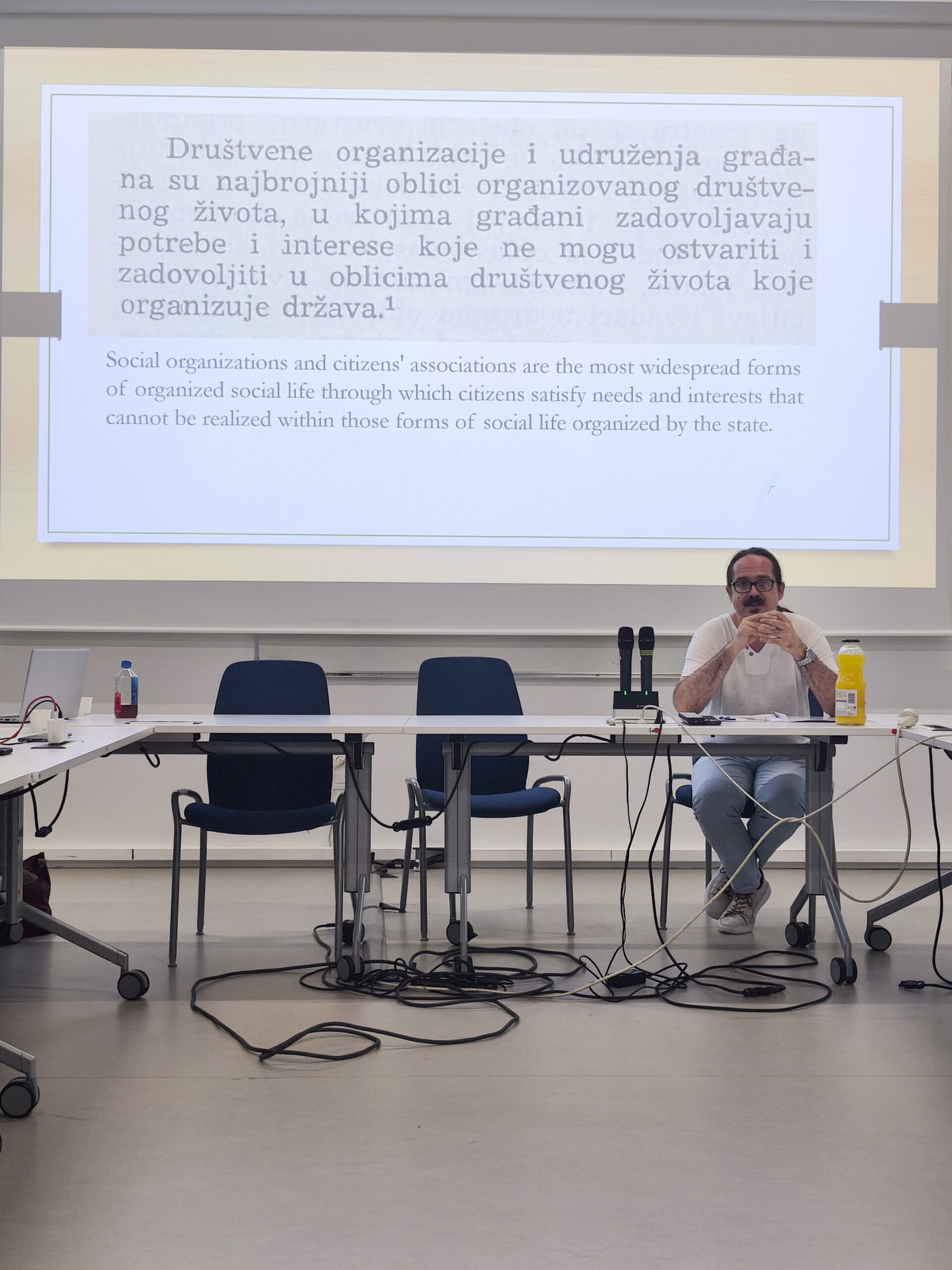
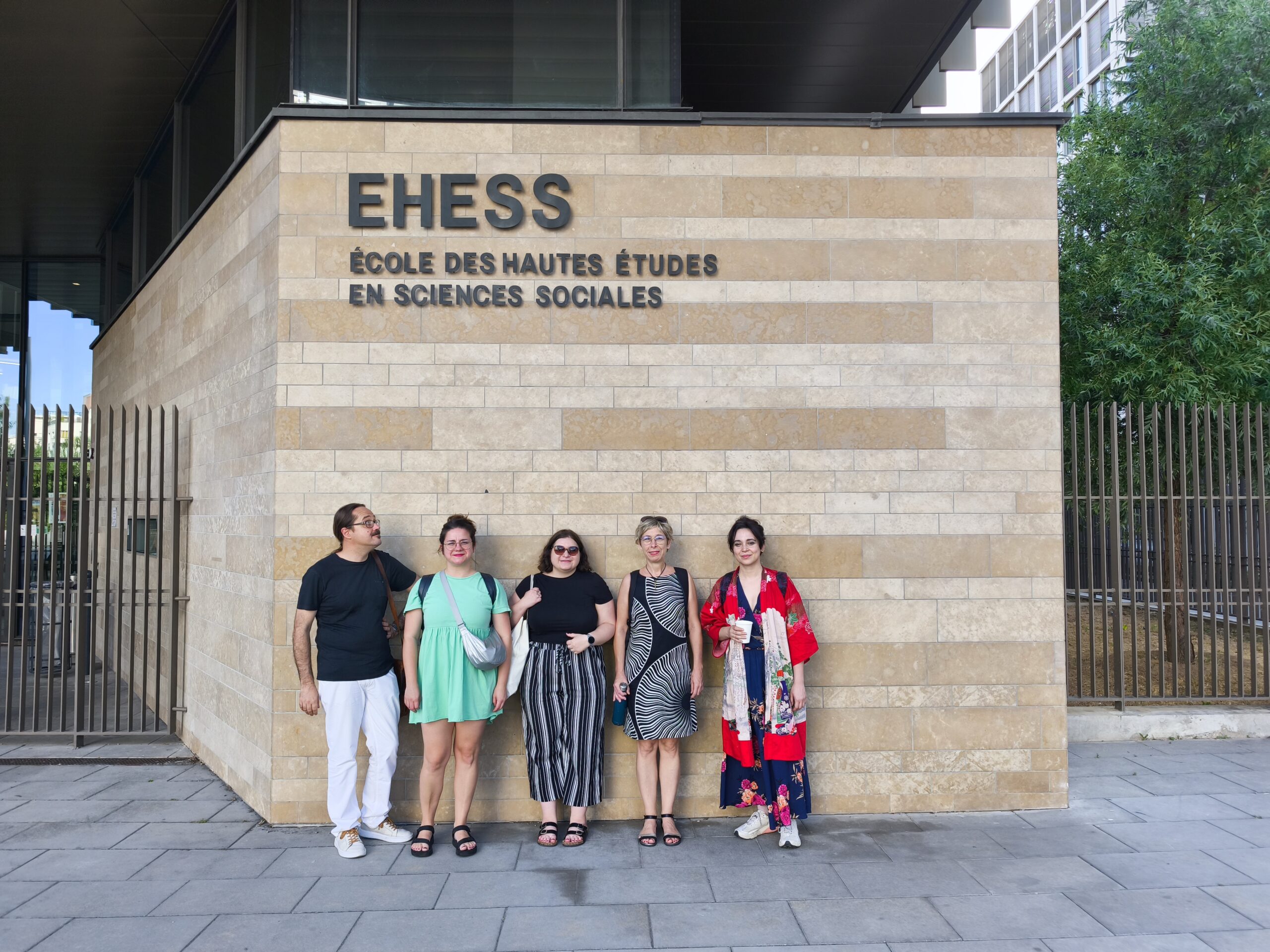
Between 24 and 26 June, a three-day workshop took place at the EHESS (École des hautes études en sciences sociales) in Paris; this was the first event in the series entitled ‘Trajectories and Experiences of Associational Life in South-East Europe: Greece and Yugoslavia’. The workshop was organised as part of the PHC Proteus bilateral project ‘Trajectories and Experiences of Associational Life in South-East Europe: Perspectives from Yugoslavia and Beyond (1918–2020)’, led by Dr Isidora Grubački at INZ. The project is funded by the Slovenian Research and Innovation Agency and the French Ministry for Europe and Foreign Affairs. As part of the Proteus project, the INZ is collaborating with the Centre for Turkish, Ottoman, Balkan and Central Asian Studies (CETOBaC) at EHESS, where the project is led by Dr Fabio Giomi. The workshop was also attended by colleagues from Greek research institutions – the University of Athens, the Academy of Athens and the University of Crete.
Our colleagues from the Institute took part in the workshop as co-organisers of the programme and active participants. The workshop brought together researchers from France, Greece and Slovenia to examine, through an interdisciplinary approach combining history, sociology and political science, the relationships between voluntary associations, the state and society in Greece and the (post-)Yugoslav region during the 20th century.
The programme was divided into three thematic sections. On the first day, participants discussed the relationship between the individual and institutions. The second day featured presentations on the relationship between the state and civil society, whilst the third day focused on the intertwining of the social and political dimensions of action.
Members of the bilateral Proteus project, the Political History programme and the research project ‘Towards a Holistic Approach to Women’s Political Thought in Central and Eastern Europe: Cases from Slovenia and the Surrounding Region in the Long Twentieth Century’ (J6-70219) also presented their research : Jurij Hadalin, Saša Hajzler, Jelena Tešija, Nina Vodopivec and Nesa Vrečer.
In the first session, Nesa Vrečer gave an introductory presentation, in which she discussed the understanding of the concept of voluntary socio-political work and the issue of the professionalisation of socio-political workers during the late period of self-management socialism. On the same day, Saša Hajzler presented the contemporary concept of international volunteering as socio-political and leisure activities in the post-Yugoslav context. On the second day, Jurij Hadalin began by presenting the late-period understanding of the concept of civil society under late socialism and the attempt to adapt it to Yugoslav self-management theory. Nina Vodopivec then spoke about the functioning of trade unions at the micro-level in the late 1980s and their (non-)integration into political changes at the start of the transition. On the final day, Jelena Tešija presented a case study on the activities of the Yugoslav members of the International Women’s Co-operative Alliance. All the presentations were followed by a lively debate, which highlighted differing perceptions of similar processes in geographically close yet ideologically and politically diverse environments.
Jurij Hadalin –The Socialist Alliance of the Working People and the Concept of Socialist Civil Society
Saša Hajzler – Sociopolitical workers 2.0? The Detours of Post-Yugoslav Political Engagement From Below
Jelena Tešija – Women co-operative experts and the debates on co-operative systems in socialist Yugoslavia and internationally
Nina Vodopivec – Rethinking Democratization: Workers, Self-Management, and Political Change in Late Socialist Slovenia
Nesa Vrečer – Voluntary vs. Professional Functions in Socialist Yugoslavia
Special attention was given to transnational links. The workshops in Paris thus laid the foundations for future joint events and publications, which will contribute to an understanding of the history of associations and social movements in Central and South-Eastern Europe from a comparative perspective. Discussions will continue in November in Ljubljana.